
Home Where we work Moldova
Moldova
Our contribution to childcare system change work has led to the reduction of the number of children in institutions in Moldova from over 11,000 in 2007 to fewer than 400 today.
We continue to advocate for those children, and continue our collaboration via the for learning and exchange of experience on child care reform.
The care landscape in Moldova
Background
Moldova is one of the poorest countries in Europe, and many families, particularly in rural areas, experience high levels of poverty. When we began working with the government in 2006, the country had one of the highest rates of children living in institutions in Europe, because institutionalisation of children was the only available solution for all the “problems”. Most children were separated from their families due to poverty and its consequences, including labour migration, limited support for children with disabilities, lack of inclusive education, social stigma surrounding single-parent families, and families’ inability to meet basic needs.
Lumos supported Moldovan authorities within the transformation of childcare system and building of the new systems of childcare, child protection, inclusive education and early intervention services.
Progress
Over the past 20 years, Moldova has implemented major change, transforming the lives of thousands of children.
At the same time, children with complex disabilities are still at the highest risk of family separation in Moldova and make up the majority of those currently living in institutions. For those children who remain with their families, many do not have access to the services they need, especially those from poor families and from the remote rural communities.
The need to support Ukrainian refugee children and families displaced by the war in Ukraine has placed additional demands on child protection, social, health and education systems of Moldova. Child refugees are among those most at risk of separation from their families and placement in an institution.
Our work to improve support for children with disabilities and their families has had a profound impact – for example, 96% of children with specialised educational needs learn in mainstream schools today.
Above: Part one of our three-part series explores how Moldovan Inclusive Education Units, supported by Lumos, help children with learning difficulties receive tailored support while staying safely at home.
60%
of the total population of Moldova are dependent on social assistance.
Around 33%
of children in Moldova live in poverty, meaning their families struggle to meet essential everyday needs.
Over 130,000 refugees
from Ukraine remain in Moldova, representing nearly 4% of the country’s total population.
The strength of long-term care partnerships in Moldova
Our beginnings
We started working in Moldova in 2006, in cooperation with the government. In 2026 the number of children living in residential care had decreased by more than 97% – proof of what sustained, long-term partnerships can achieve.
Over the years, our work has strengthened policy and strategy, and galvanised legislative change and capacity building. We worked with the national and local government, donors, and other civil society organisations to contribute to the development of all strategies and national plans regarding children’s rights. We also led the development of Moldova’s national strategy and programme for inclusive education, supporting children with disabilities who had been separated from their families and placed in institutions. Lumos’ inclusive education model, developed and piloted in Moldova, was subsequently adopted nationwide and is now fully funded by the Moldovan Government.
Our work
Today, much of our work focuses on children at greatest risk of family separation and institutionalisation – those with complex physical or learning disabilities and those living in poverty, especially in remote rural areas. Decades of evidence show that care systems centered on early identification and intervention; adequate targeted services and inclusion offer better outcomes for children. With the right support, families can care for children with disabilities at home, and every child can thrive within a supportive community.
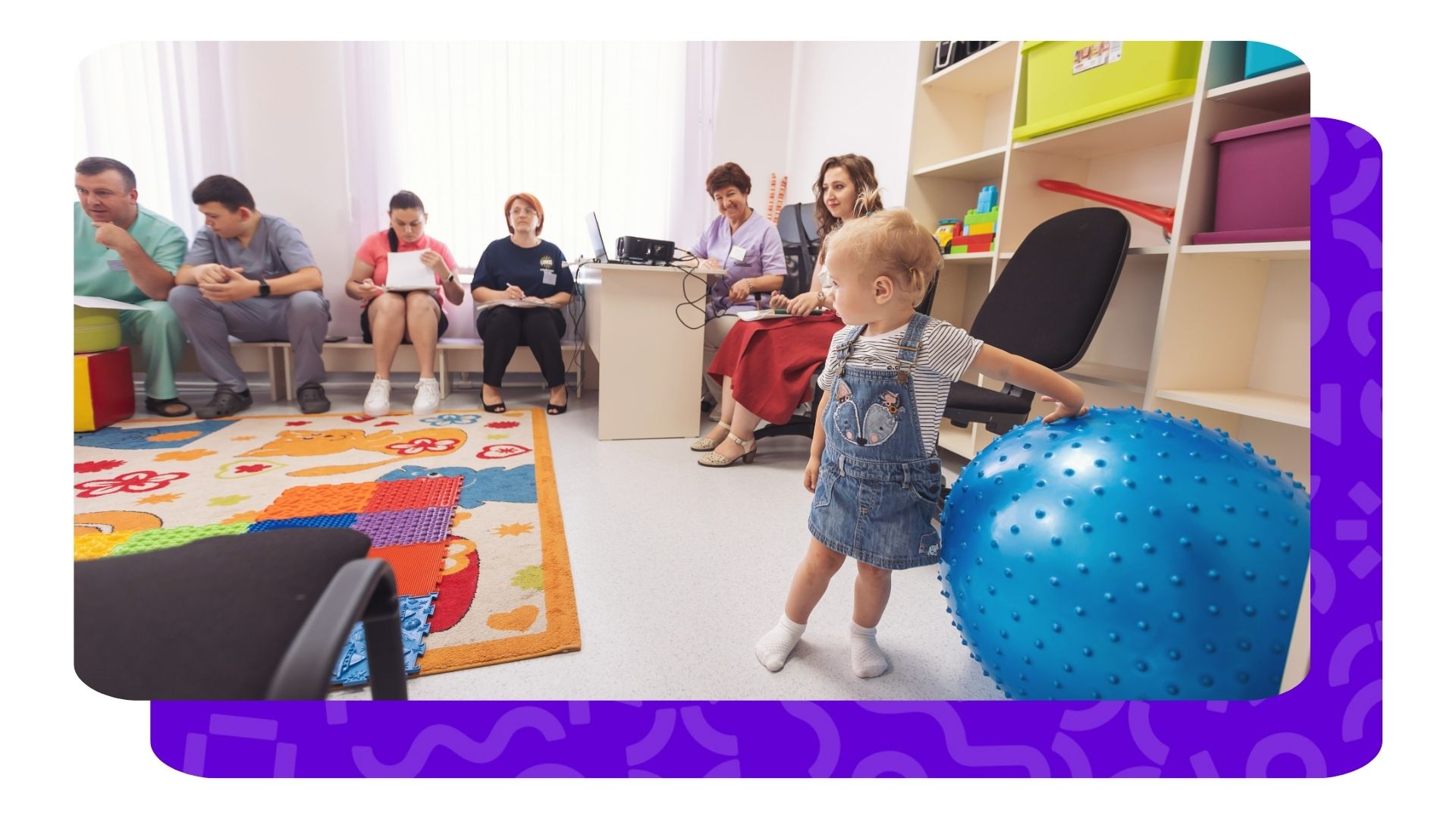
Our Early Childhood Intervention (ECI) model is now being scaled by the government as part of Moldova’s National Action Plan, which aims for 80% coverage of the country through 24 new district centres, and an extended network of early childhood development offices. In 2025, approximately 100 health and social care professionals were trained in early childhood intervention, inter- and multi-disciplinary collaboration, and the application of holistic approach and child- and family-centred principles – contributing to the sustainability of the government funded ECI system of services.
Work continues to ensure that the remaining children living in institutions (less than 400) transition into family-based care.
Our care reform work in Moldova
Through our technical leadership and strategic partnerships, Moldova has transformed most of its residential care system; the focus is now on:
Expanding early childhood intervention services
We’re helping the country expand early childhood intervention services nationwide, ensuring children with disabilities receive the support they need to thrive in their families and communities.
Inclusive education
We’re currently developing a model to support the educational inclusion of preschool-aged children (from 2 to 6) in early childhood education system of services, such as kindergartens and preschools.
Advocating for national reform
We’re supporting reform of Moldova’s child protection system and related education, health and social care services by influencing policy and legislative development, strengthening governance frameworks, and supporting alignment with international and EU standards as the country progresses towards EU accession.
Specialist family support
We are strengthening parental capacity and providing targeted support services for parents of children with disabilities. By training health and social care professionals in early childhood intervention and integrated, family-centred support, we are embedding parental support programmes within government service systems.
