
From commitments to action: Lumos at the Global Ministerial Conference on Ending Violence Against Children
24.11.2026
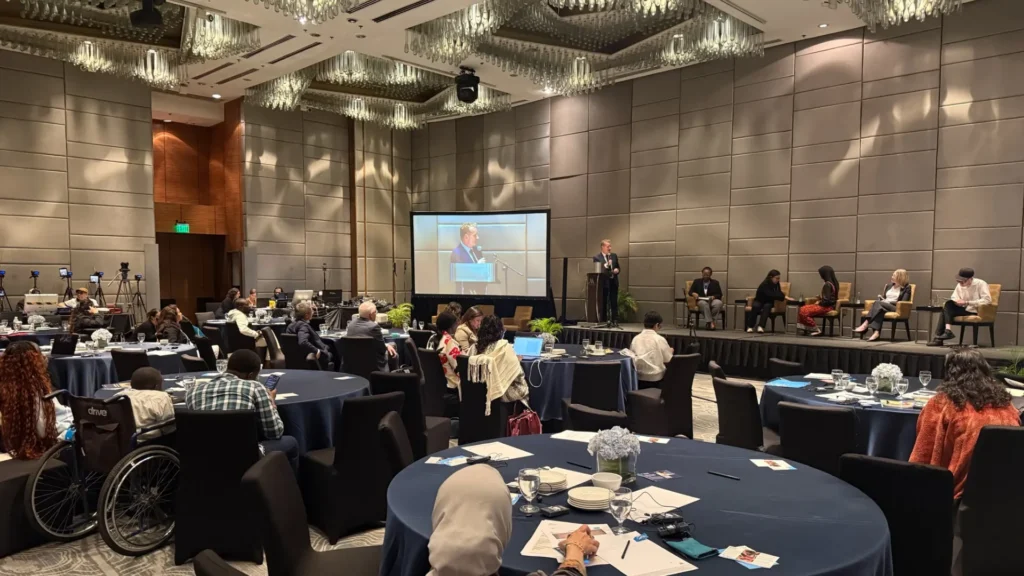
Ahead of the main conference, Lumos co-convened a satellite event, Transforming Care Systems to Prevent and End Violence Against Children.
Last week Lumos joined governments, young people, civil society organisations and global partners in Manila for the Second Global Ministerial Conference on Ending Violence Against Children, calling for care reform and family strengthening to be recognised as central to efforts to prevent and end violence against children.
This milestone global gathering provided an opportunity to take stock of progress since the first Ministerial Conference in Bogota in 2024 and strengthen commitments from governments around the world.
At that first conference, Lumos highlighted the connections between violence against children and care. Two years on, Lumos is clear that not only are violence and care linked: institutionalisation is itself a form of violence against children.
The critical role of care reform in ending violence against children
While violence can occur in any care setting, evidence shows that children in residential institutions face particular risks of harm, neglect and abuse. Institutionalisation deprives children of their rights, and is also a form of structural violence, embedded within laws, policies, and funding systems. Ending violence against children therefore requires transforming care systems so that all children can grow up in safe and loving families.
We know this is achievable, and transforming care systems from institutional to family-based models can prevent the violence of institutionalisation and protect children’s rights.
Exploring the connection
Ahead of the main conference, Lumos co-convened a satellite event, Transforming Care Systems to Prevent and End Violence Against Children, alongside the UK Government (FCDO), Better Care Network, Save the Children International, UNICEF, Georgetown University, and the VAC and Care Working Group of the Transforming Children’s Care collaborative.
Moderated by Lumos CEO Howard Taylor, the event brought together more than 100 participants in person, with many more joining online, to explore the relationship between violence against children and care systems.
Ending violence against children is right. It is smart. And it is possible. Two years ago in Bogota, we outlined the connection between violence against children and care, but the violence of institutionalisation persists. Institutionalisation is itself a form of violence against children, a preventable form of violence, a form of violence that we can end.
-Howard Taylor, Lumos CEO.
The discussion highlighted that the evidence needed to end institutionalisation and the violence it entails already exists, as do positive alternatives that enable children to grow up safely in families and communities.
CPA Carren Achieng Ageng’o, Principal Secretary of Kenya’s State Department for Children Services, highlighted the role of kinship care which is a core component of sustainable care reform:
We need to treat kinship carers as a priority group. Let us invest in evidence on informal kinship care solutions as part of ending violence against children.
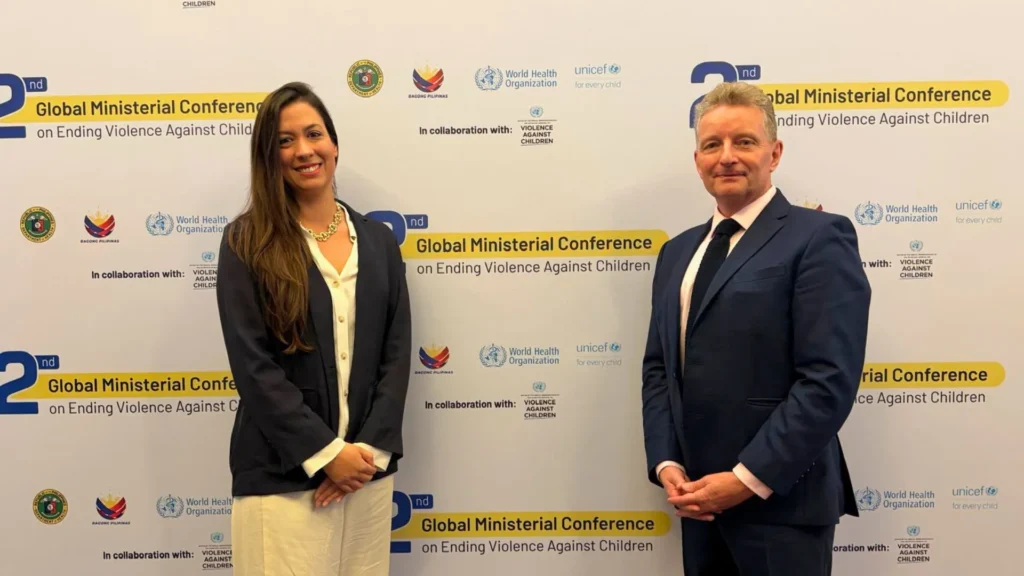
Pictured: Mara Cavanaugh, Lumos Deputy Director of Programmes and Howard Taylor, Lumos CEO, in attendance at the Second Global Ministerial Conference on Ending Violence Against Children in Manila.
Turning global commitments into action
Manila was also an opportunity to examine how commitments made at the first Ministerial Conference have translated into change.
Research by Lumos, The Open University and Better Care Network analysed 103 government pledges made at the first conference. While the analysis found encouraging commitments to family strengthening and support for caregivers, explicit commitments to transition care systems from institutional to family-based care appeared in the pledges of just 10 governments.
At this second Ministerial Conference, Lumos therefore called for care reform and family strengthening to be firmly embedded within efforts to end violence against children, supported by clear targets, adequate resources and accountability for delivering change.
Lumos also shared its paper, Preventing the violence of institutionalisation, which sets out why institutionalisation constitutes violence against children and why transforming care systems is fundamental to preventing it.
“Ending institutionalisation requires government-led, rights-based care reform. It requires investing in prevention, strengthening families, developing sustainable family-based alternatives, and aligning policy, financing and accountability to deliver lasting change. The investment case extends far beyond child protection: strengthening care and protection systems delivers benefits across health, education, social protection and other sectors, generating better long-term outcomes for children and families. Investing in child protection is ultimately an investment in society as a whole.
“This is why Lumos places ending violence against children at the heart of its strategy and calls for coordinated action across child protection, health, education, disability, justice and social protection. The Second Global Ministerial Conference has provided a vital opportunity to strengthen partnerships, accelerate progress and build global momentum towards ending all forms of violence against children,” said Mara Cavanagh, Deputy Director of Programmes at Lumos.
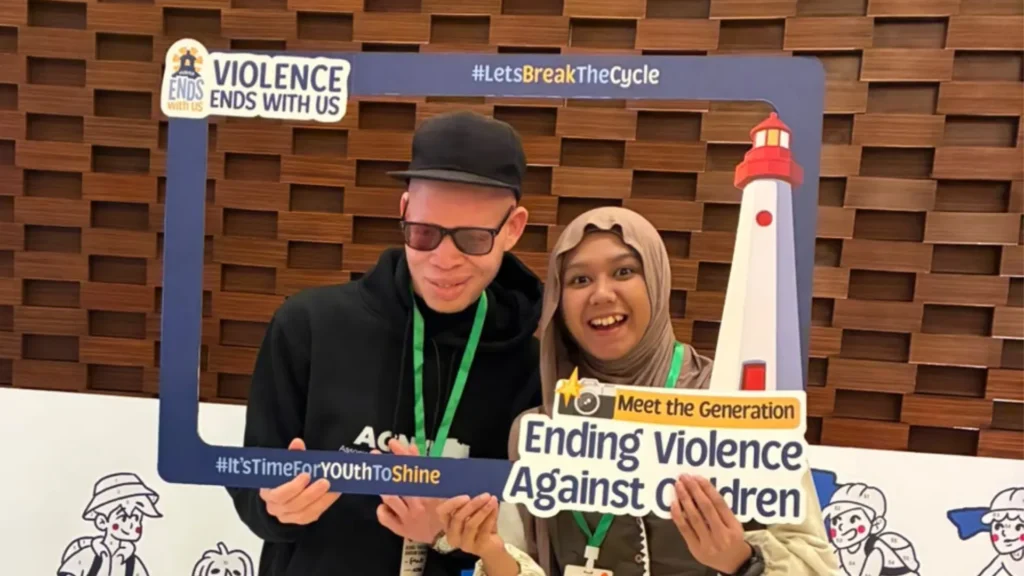
Pictured: Enoch from Kenya and Chacha from Indonesia, both members of the FCDO Global Campaign on Children’s Care Reform’s Children and Young People’s Taskforce, co-led by Lumos.
What happens after Manila matters
The real measure of the conference’s success will be what happens next. Lumos will continue working with governments and partners to turn pledges into action and ensure care reform and family strengthening remain central to efforts to end violence against children.
And, as Enoch, a care-experienced advocate from Kenya who joined our satellite event panel, reminded delegates, children and young people must have a meaningful role in shaping that change:
Listening to me is not about listening to me right now. It is about what you will do after Manila.
You can support our efforts to end violence against children.
